
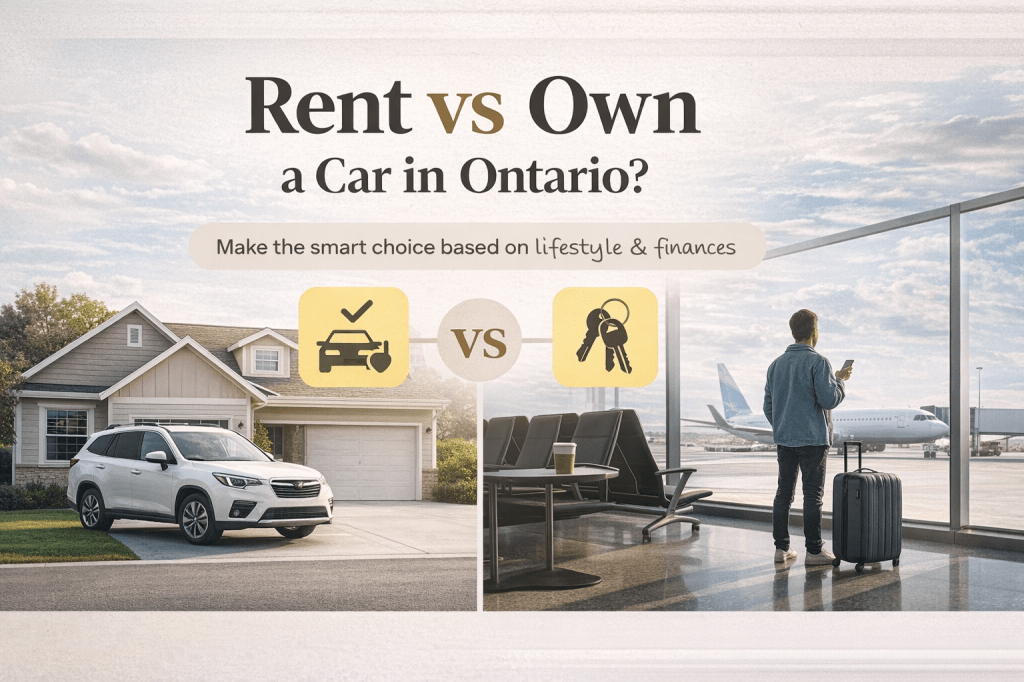
Mobility Is Freedom – But It Comes at a Cost
Mobility is freedom — but freedom always comes with a cost.
As a mom, transportation doesn’t feel optional. It feels essential.
School drop-offs. Grocery runs. Activities. Appointments. Emergencies. When you have children, having a vehicle available can feel like security, stability, and peace of mind.
But I’ve also seen the other side.
If you’re trying to decide whether to rent or own a car in Ontario, especially as a family or newcomer, understanding the real costs and lifestyle implications is essential.
So the real question isn’t:
Is owning better than renting?
It’s:
What makes financial and practical sense for my current season of life?
In Ontario, this decision carries real financial weight. Let’s break it down clearly without pressure, assumptions, or emotion-driven thinking.
The True Cost of Owning a Car in Ontario
Owning a vehicle is not just about buying a car. It’s about sustaining it.
Here is a realistic estimate of monthly ownership costs in Ontario:
| Expense | Estimated Monthly Cost |
|---|---|
| Car Payment | $350–$600 |
| Insurance | $200–$350 |
| Fuel | $150–$300 |
| Maintenance (averaged annually) | $100–$200 |
| Parking (urban areas) | $100–$250 |
| Winter Tires (annual avg.) | $50–$75 |
| Estimated Total | $950–$1,775/month |
That translates to approximately $11,000–$21,000 per year, depending on usage and location.
For families using their vehicle daily, this may be justified. For occasional drivers, the financial commitment may outweigh the benefit.
Ontario Insurance Reality (Especially for Newcomers)
Ontario has some of the highest auto insurance rates in Canada.
Premiums vary based on:
- Driving history
- Postal code
- Vehicle type
- Claims record
- Years licensed in Canada
Newcomers without an established Canadian driving history may face higher premiums initially.
This is often one of the most underestimated costs of ownership.
Before committing, it’s important to factor in real insurance quotes, not assumptions.
When Ownership Often Makes Sense
Ownership tends to be practical when:
✔ You Have Daily Transport Needs
Parents managing school, daycare, and extracurricular activities often benefit from consistency.
✔ You Live in Suburban or Transit-Limited Areas
Public transportation may not meet daily mobility requirements.
✔ You Plan to Stay Long-Term
If you’re settling for 5+ years, spreading ownership costs over time may be efficient.
✔ You Value Immediate Availability
No booking. No planning. No waiting.
For many families, ownership offers emotional security, and that has value.
When Renting Makes Financial Sense
I used to assume renting was more expensive until I ran the numbers. In certain situations, it is strategically smarter.
✔ You Work From Home
Driving occasionally does not justify heavy fixed expenses.
✔ You Live in Urban Areas
Strong transit access reduces the necessity of daily vehicle ownership.
✔ You’re Newly Relocated
Renting provides flexibility while you:
- Stabilize income
- Build insurance history
- Assess long-term plans
✔ You Travel Frequently
If your car sits unused for long periods, ownership may not be efficient.
A Realistic Cost Comparison
Let’s compare two scenarios.
Scenario A: Occasional Driver (4 Days Per Month)
Average Ontario rental rate: $50–$90 per day
Using a mid-range estimate: $70 per day
4 days × $70 = $280 per month
$280 × 12 = $3,360 per year
Scenario B: Ownership (Moderate Use Family Vehicle)
Estimated annual ownership cost: $15,400 per year (based on averages above)
The Difference:
Occasional renting: ~$3,360/year
Ownership: ~$15,400/year
That’s roughly a $12,000 annual difference.
However, if you require a vehicle 5–6 days per week:
20 rental days × $70 = $1,400/month
$1,400 × 12 = $16,800/year
At that point, ownership becomes comparable and often more practical.
I’ve learned that frequency changes the math. The right decision shifts when your usage shifts.

A Hybrid Strategy Many People Overlook
Mobility does not have to be all or nothing.
Some families choose:
- Transit during weekdays
- Rentals for trips
- Delayed ownership after relocation
Some newcomers rent for 6–12 months before purchasing.
This reduces immediate financial pressure while providing flexibility.
Rent vs Own Decision Framework (Ontario Edition)
Usage Frequency
- ☐ 0–1 day per week
- ☐ 2–3 days per week
- ☐ 4–5 days per week
- ☐ 6–7 days per week
Low-frequency use (0-3 days) often favours renting
High-frequency use (5-7 days) may justify ownership
Financial Comfort
Can you comfortably sustain $1,000+ per month in vehicle-related expenses (loan/lease, insurance, gas, maintenance, parking)?
- ☐ Yes, comfortably
- ☐ Yes, but it tightens my budget
- ☐ No, it would create stress
If ownership introduces strain, flexibility may be wiser.
If expenses feel stable and predictable, ownership may be sustainable.
Stability Timeline
How long do you realistically plan to stay in your current city or region?
- ☐ Less than 1 year
- ☐ 1–3 years
- ☐ 3–5 years
- ☐ 5+ years
Short-term stays often favour renting.
Long-term stability may justify ownership.
If you expect relocation, career shifts, or housing changes soon, flexibility may be more valuable than commitment.
If you’re leaning toward renting for flexibility, choosing a reputable rental provider with transparent pricing and good insurance options can make a significant difference in your overall experience. I’ll share a few reputable and flexible options below for comparison.
Lifestyle Needs
Which situation best reflects your current season?
- ☐ Remote professional working from home
- ☐ Urban resident with reliable transit access
- ☐ Newcomer still settling into the city
- ☐ Suburban household with frequent errands
- ☐ Parent managing school drop-offs and activities
Daily mobility patterns matter more than social perception.
Ownership increases convenience when mobility is constant.
Renting preserves freedom when mobility needs fluctuate.
Final Reflection
Based on my current season, the option that aligns best with my lifestyle and financial capacity is:
- ☐ Renting
- ☐ Owning
- ☐ Renting temporarily before ownership
Conclusion: Choose Based on Season, Not Pressure
As a parent, ownership may feel stable and reassuring.
As a remote professional or newcomer in transition, renting may feel lighter and more strategic.
Neither option is universally better.
The smarter choice aligns with:
- Your frequency of use
- Your financial comfort
- Your stability timeline
- Your lifestyle demands
Make the decision that supports peace of mind, not pressure. If renting aligns with your current season, choose providers that offer flexible cancellation, transparent pricing, and reliable customer support. If ownership aligns with your lifestyle, prioritize total cost of ownership, not just the monthly payment.







 Angenerate
Leave a comment